#WorldWCR – Women Shifting Gears: Maria Gennaro
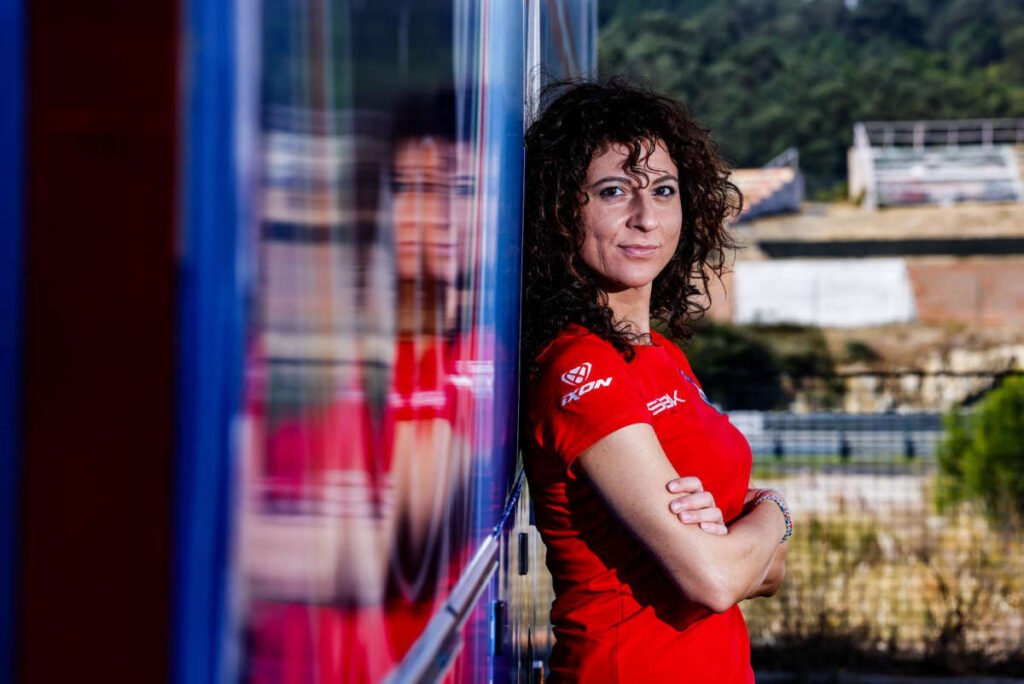
“The Clinica has always been a kind of safe space away from the chaos.”
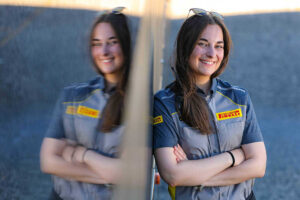
I’m a physiotherapist and I’ve also trained in osteopathy. My work at the circuits begins on Thursday, managing any rider injuries from previous races or training. Specifically, the work involves massage therapy, post-injury rehabilitation and the management of pain or functional limitations. As one of the most experienced physios in the paddock, riders come to me with other things too, maybe they’ve slept badly, have a headache, stiffness or temporomandibular joint issues. Sometimes a treatment is more for relaxation purposes, but that too is a need, particularly for riders who like to stick to a routine each week. The Clinica has always been a kind of safe space away from the chaos.
After graduating in physiotherapy, I started at Dr. Costa’s ‘Poliambulatorio Clinica Mobile’, a fixed clinic in Imola. I was based there, working closely with medical director Costa, until he put me down for my first SBK round, at Donington Park in 2013. I didn’t ask to go, he basically told me I was going, but I was very pleased because I’d been wanting to get into the race side of things.
The power of teamwork…
In the paddock, there’s a time pressure that doesn’t exist in a traditional clinic. You can still do proper evaluations and therapy, but you’re working to a tight schedule and need to make the best decisions in the moment. Having to use all your skills to find the best possible solutions in a short timeframe is stimulating. You collaborate with other professionals and learn from the riders’ determination, which makes for a very motivating environment.
The paddock can feel a bit like home; it’s familiar and friendly, which I really like. The same goes for our interactions with the riders. There’s been a generational turnover since I arrived in 2013, and many of the riders are now significantly younger than me! Everyone is always respectful and friendly though, and there’s no big divide between the riders and paddock staff. For us medical staff, I think it’s normal to have quite a close relationship with the riders, as they trust in what we do, and seek out our skills and empathy. Particularly the very young riders away from home, for whom we can be an important point of reference. There’s a responsibility to get the riders ready to perform and we work as a team to ensure all the necessary support so that a rider can race and stay safe.
Beyond the medical textbook
As medical professionals, our technical skills are important, but empathy is crucial. And we need to be adaptable – the situation isn’t always as it is in a textbook! It’s also important to be able to work effectively as a team and know when to ask for help and where to draw the line.
I arrived at a time when Dr. Costa was famous for his way of working – showing patients, whether athletes or non-athletes, how to push a little further in situations where hospital protocols were perhaps a little too rigid. That said, the rider is always the focus, and we must protect their health. They of course push to get back on the bike as quickly as possible, so we need to be strong in our convictions; it’s their body but we know the risks they take if they choose not to listen. But I think today’s riders are a lot more aware, so the challenge is ensuring they understand what they can and cannot do, also with a view to future races and not just the present moment.
When you treat a rider and know they can ride but aren’t quite sure to what point they’ll be able to perform, it’s really gratifying to see them achieve a good result or a podium, because even we cannot appreciate exactly how much they’ll be able to do once they’re on the bike. And they surprise you! Because maybe half an hour earlier they were in the Clinica in pain, and then… wow! They’re incredible.
Sometimes riders come to say they couldn’t have raced without our help, while others show gratitude subtly, like seeking treatment from me before the next race. It’s not always public, but it’s meaningful. We’re not looking for praise, of course not, but it’s nice when the riders recognise what we’re doing.